
Have you ever wondered if Asperger’s Syndrome is linked to speech delays? You’re not alone.
Many parents and caregivers find themselves asking this very question. Understanding the nuances of Asperger’s can be challenging, especially when it comes to recognizing and addressing speech-related issues. Your concerns are valid, and they deserve clear, straightforward answers. Imagine the relief you’ll feel when you finally grasp the connection between Asperger’s and speech development.
This knowledge can empower you to make informed decisions and support your loved ones more effectively. We will explore the relationship between Asperger’s Syndrome and speech delays. We’ll break down the facts and myths, so you walk away with a deeper understanding. Stay with us, and together we’ll uncover the insights that could make a difference in your life.
Asperger’s Syndrome Overview
Understanding Asperger’s Syndrome can be enlightening, especially if you’re navigating its nuances for yourself or a loved one. Asperger’s is part of the autism spectrum and affects how individuals interact socially and communicate. While many are familiar with autism, Asperger’s carries its unique set of characteristics. Let’s delve deeper into what this means.
What Is Asperger’s Syndrome?
Asperger’s Syndrome is often characterized by difficulties in social interactions and nonverbal communication. It also includes repetitive patterns of behavior and interests. People with Asperger’s usually have average or above-average intelligence, but they might struggle with understanding social cues.
Imagine being in a crowded room, but feeling like you’re missing the social signals everyone else seems to catch effortlessly. That’s a glimpse into the challenges someone with Asperger’s might face daily.
Social Interaction Challenges
If you or someone you know has Asperger’s, you might notice challenges in forming friendships or maintaining conversations. This isn’t because they aren’t interested. Often, they simply perceive social interactions differently.
Consider the idea that while someone with Asperger’s may not easily engage in small talk, they can dive deeply into topics they love. This can be an opportunity to engage in meaningful conversations on subjects they are passionate about.
Communication Styles
Communication in Asperger’s Syndrome can vary greatly. Some may have advanced vocabularies but struggle with practical communication in everyday situations. It’s not uncommon for them to express themselves more comfortably through written words than spoken ones.
Have you ever received a text or email from someone with Asperger’s that was exceptionally detailed? This is a common way for them to express thoughts clearly without the pressure of verbal conversation.
Speech Delay And Asperger’s
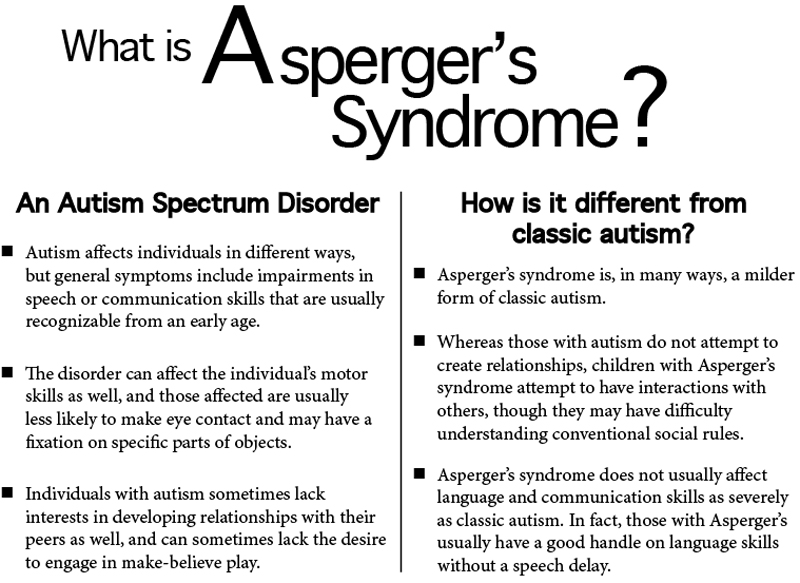
Speech delay isn’t a typical characteristic of Asperger’s Syndrome. Most individuals with Asperger’s develop language skills within the expected timeframe. However, the nuances of how they use and interpret language can be different.
It’s crucial to differentiate between speech delay and challenges in speech nuances. While someone with Asperger’s might speak clearly, they may struggle with the give-and-take of conversation.
Personal Experience Insight
Reflecting on my own experiences, I recall conversations with a friend who has Asperger’s. Initially, her responses seemed abrupt, but over time, I learned to appreciate her directness and deep insights on topics she cared about.
Have you ever felt surprised by the unique perspectives someone with Asperger’s can offer? These moments can be eye-opening and enrich your understanding of human interaction.
Practical Tips For Engaging
- Embrace direct communication: Avoid ambiguity and be clear in your discussions.
- Focus on shared interests: Engage with topics they show enthusiasm for.
- Be patient: Allow time for them to express their thoughts and feelings.
By understanding and adapting to the communication styles of those with Asperger’s, you can foster meaningful connections. What steps will you take today to better understand someone with Asperger’s?
Credit: flathatnews.com
Speech Development In Children
Speech development in children is a fascinating journey. It unfolds uniquely for each child. While most children follow a typical pattern, others experience variations. Some children might start speaking early. Others may take more time. Understanding these differences can help parents and caregivers. It also supports professionals who work with children.
Speech Milestones In Early Childhood
Most children say their first words around 12 months. By age two, they form simple sentences. A vocabulary of 50 words is common at this stage. From ages three to five, language skills grow rapidly. Children begin using complex sentences. They ask questions and express thoughts clearly. This is typical for many children.
Understanding Speech Delays
Speech delays occur when a child does not meet these milestones. It might mean slower language development. Some children catch up with time. Others may need extra support. Speech delays can stem from various factors. Hearing issues or developmental disorders can be causes. Early intervention often helps improve outcomes.
Asperger’s Syndrome And Speech Development
Children with Asperger’s may experience speech delays. It is not uncommon. They might have advanced vocabulary but struggle with conversation skills. Social communication can be challenging. Understanding context or tone may be difficult. These children often benefit from speech therapy. Supportive environments also aid in their development.
Supporting Speech Development
Parents can play a vital role. Reading to children daily encourages language growth. Engaging in conversations boosts vocabulary. Asking open-ended questions stimulates thinking. Seeking professional advice is crucial if concerns arise. Early assessment and intervention can make a difference. Each child’s journey is unique and deserves support.
Common Speech Patterns In Asperger’s
Understanding speech patterns in individuals with Asperger’s syndrome can help you better communicate and connect. Asperger’s, a form of autism, often comes with unique speech characteristics that can vary from person to person. By recognizing these patterns, you can tailor your approach and foster more meaningful interactions.
Delayed Speech Onset
Not everyone with Asperger’s experiences delayed speech onset, but it’s common enough to be noteworthy. Some children may start speaking later than their peers, making early communication challenging. This delay can affect social interactions, as verbal communication is a key aspect of building relationships. Have you ever noticed how much easier it is to bond over shared stories or jokes?
When speech onset is delayed, expressing needs or emotions verbally can be difficult. Imagine trying to convey frustration or joy without words—how would you manage it? Encouraging alternative communication methods, such as gestures or visual aids, can bridge this gap. As speech develops, these tools can complement verbal communication.
Atypical Speech Characteristics
Speech in individuals with Asperger’s often includes atypical characteristics that are uniquely their own. You might notice a formal tone, rich vocabulary, or a pattern of speaking that seems overly precise. This can be fascinating, as it often reflects a highly focused interest or passion.
Speech may also include unusual prosody—variations in pitch, rhythm, and intonation. Conversations might have a musical quality, with unexpected highs and lows. Have you ever found yourself captivated by someone’s distinctive way of speaking? It’s a reminder that communication is more than just words.
Another characteristic can be the repetition of phrases or topics. This repetition can be comforting and predictable for someone with Asperger’s, providing structure in communication. Encouraging patience and openness in conversations can create a supportive environment for expression.
Recognizing these speech patterns opens up opportunities for deeper connection. How might you adjust your communication to better engage with someone with Asperger’s? You might find that patience and understanding can lead to surprisingly enriching interactions.
Factors Influencing Speech Delay
Speech delay in individuals with Asperger’s may occur due to various factors like neurological differences. Social interaction challenges can also impact speech development, leading to delays. Early intervention and tailored therapies may help improve communication skills.
Factors influencing speech delay in individuals with Asperger’s can be diverse. Understanding these factors is key to addressing speech challenges effectively. Speech delay in Asperger’s often stems from neurological and social factors. Each plays a role in how speech develops. Let’s explore these factors in detail.Neurological Aspects
Neurological differences can affect speech development in Asperger’s. The brain processes language in unique ways. This can lead to delays in speech and language skills. Some may struggle with understanding complex language. Others might have difficulty forming sentences. These neurological factors can vary widely among individuals. Recognizing these differences is crucial for support.Social Interaction Challenges
Social interaction can impact speech development too. Individuals with Asperger’s may find social cues challenging. This can make engaging in conversations harder. They might not pick up on non-verbal signals. This can lead to difficulties in speech practice. Limited social engagement can slow speech progress. Addressing social challenges can support speech development.Identifying Speech Delay
Many children with Asperger’s may not have speech delays, yet some experience challenges in social communication. Early signs include unusual speech patterns or difficulty understanding social cues. Identifying these traits early can assist in providing the right support and interventions.
Identifying speech delay in children with Asperger’s Syndrome can feel like piecing together a puzzle. Speech development varies significantly, and what might be a delay for one child could be perfectly normal for another. Understanding the specific signs and knowing how to assess them can help you support your child’s communication journey more effectively.Signs And Symptoms
Spotting speech delay involves looking for certain signs. Does your child struggle with forming words or sentences? Are they not as talkative as other children their age? These could be early indicators. Children with Asperger’s may have challenges with the rhythm or flow of speech. You might notice a lack of back-and-forth conversation or difficulty in understanding simple questions. Observing these nuances can guide you in seeking the right support.Assessment Tools
There are several assessment tools available to evaluate speech delay. Speech-language pathologists often use standardized tests to measure a child’s speech development. Consider using a speech development checklist. These tools can help you track specific milestones and identify areas of concern. Engaging with these resources can empower you to take the next steps in supporting your child. Have you ever tried a speech assessment app? These can be a fun and interactive way to gauge your child’s speech progress. They provide a convenient option to monitor speech patterns and improvements over time. By being proactive and informed, you can make a significant difference in your child’s communication skills. Remember, every child progresses at their own pace, and early intervention can lead to positive outcomes. How will you support your child’s speech journey today?
Credit: www.thetreetop.com
Strategies For Supporting Speech Development
Children with Asperger’s may experience speech delays. Encouraging conversation can help improve speech skills. Reading books together also supports language development.
When it comes to supporting speech development in individuals with Asperger’s Syndrome, personalized strategies can make a significant difference. Speech delay is a common challenge that many face, but with the right tools and support, progress is achievable. Let’s dive into some effective strategies that can help foster communication skills.Speech Therapy Techniques
Speech therapy can be a game-changer. Techniques like modeling, where therapists speak and encourage imitation, can be very effective. Visual supports, such as picture cards, help individuals associate words with images, making learning more intuitive. Interactive exercises are also crucial. Engaging in role-play or storytelling can boost confidence and fluency in speech. Regular practice through fun activities keeps motivation high and progress steady.Parental And Educator Roles
Parents and educators play a critical role in speech development. You can create a supportive environment by encouraging regular communication. Simple conversations about daily activities can become valuable learning moments. Teachers can adapt lessons to include more visual aids and interactive discussions. This not only supports speech development but also enhances overall learning. Teamwork between parents and educators ensures consistency, reinforcing progress both at home and in school. Do you remember a time when you felt truly heard? Providing that same feeling to someone with speech delays can be empowering. Small gestures, like patient listening, can make a world of difference. Implementing these strategies can lead to noticeable improvements in speech development. What can you do today to support someone on their journey to finding their voice?Research Insights
Understanding the relationship between Asperger’s Syndrome and speech delay can be pivotal for parents and caregivers. While Asperger’s, a condition on the autism spectrum, often involves challenges in social interaction, speech delay is not a hallmark symptom. However, some individuals with Asperger’s might still experience speech-related issues. Let’s dive into research insights to better understand this connection.
Recent Studies
Recent studies have shed light on the nuances of speech development in individuals with Asperger’s. A study from the Journal of Autism and Developmental Disorders found that while classic speech delay is less common, subtle language and communication challenges are prevalent. These might include difficulty with the rhythm of speech or understanding non-verbal cues.
Another research by the Autism Research Institute highlighted that early intervention can significantly improve communication skills. This underscores the importance of recognizing even minor speech issues early. If your child seems to struggle with specific language patterns, consulting a specialist might be beneficial.
Future Directions
Researchers are continually exploring new ways to support language development in those with Asperger’s. Future studies aim to focus on personalized therapy approaches. This could mean tailoring interventions based on individual communication strengths and challenges.
Moreover, technology is poised to play a crucial role. Innovative apps and interactive tools are being developed to aid language learning. Imagine the possibilities if your child could practice speech in a fun, engaging way daily.
These advancements open up exciting opportunities for enhancing communication skills. How do you think such personalized tools could change the landscape of language therapy? Your insights could be invaluable in shaping future research directions.

Credit: www.appliedbehavioranalysisprograms.com
Frequently Asked Questions
Do Asperger’s Have Delayed Speech?
Individuals with Asperger’s typically do not have delayed speech. They often develop language skills on time. However, they might face challenges with social communication and understanding non-verbal cues. Early intervention can help improve these skills. Always consult a healthcare professional for specific concerns.
At What Age Do Children With Aspergers Speak?
Children with Asperger’s may start speaking at the typical age of 12 to 18 months. Some might experience slight delays. Early intervention can help improve speech development. Each child’s timeline can vary. Consult a specialist for personalized advice.
Can Asperger’s Cause Speech Problems?
Asperger’s can lead to speech difficulties. Individuals may struggle with tone, rhythm, or conversational skills. They might find social interactions challenging and have trouble interpreting others’ speech patterns. Early intervention and therapy can help improve communication abilities.
Does High-functioning Autism Have Speech Delay?
High-functioning autism can involve speech delay, but not all individuals experience it. Speech development varies widely. Early intervention and therapy can help improve communication skills. It’s crucial to consult healthcare professionals for personalized guidance and support. Understanding individual needs is key to addressing speech challenges effectively.
Conclusion
Understanding speech delay in Asperger’s is vital for effective support. Not all individuals with Asperger’s experience speech delay. Each person is unique. Early diagnosis helps in addressing challenges. Parents should consult professionals for tailored advice. Communication techniques can improve speech skills.
Encourage social interactions. Practice patience and empathy. Create a supportive environment for growth. Educate yourself about Asperger’s traits. Awareness and understanding make a difference. Stay informed to provide the best care. Help individuals thrive. Recognize their strengths. Celebrate progress, big or small.
Support is key to success. Every step forward matters.