
Have you ever noticed your child struggling to form words or sentences compared to their peers? It’s natural to feel concerned and seek answers.
Understanding what causes a speech delay is the first step in supporting your child’s development. You’ll discover key insights into why speech delays occur and what you can do to help. By the end, you’ll feel empowered with the knowledge to make informed decisions and foster a nurturing environment for your child’s communication growth.
Don’t miss out on unlocking the mysteries behind speech delays and how you can make a difference.
Common Developmental Milestones
Speech delays can occur due to various factors such as hearing problems, lack of social interaction, or developmental disorders. Identifying the root cause is crucial for effective intervention. Early diagnosis and support can help children catch up with their peers.
Understanding the common developmental milestones in a child’s speech journey can be both fascinating and crucial for parents and caregivers. Speech delay can be concerning, but knowing what to expect at different ages helps you recognize if there’s a cause for concern. Early intervention can make a big difference. So, what should you be looking for as your child grows? ###1. Birth To 3 Months
Babies are natural communicators. In their first few months, they start to coo and make gurgling sounds. You might notice your baby reacting to loud noises. This is the start of their auditory journey. They listen and begin to familiarize themselves with your voice and other sounds in their environment. ###2. 4 To 6 Months
This is a magical time as your baby starts to babble. They experiment with sounds, often repeating consonants like “mama” or “baba.” Does your baby respond to their name? That’s a key milestone. It shows they’re connecting sounds with people and objects. ###3. 7 To 12 Months
Around this age, your child starts to understand basic words like “no” and “bye-bye.” They might even say a few simple words themselves. Babies often use gestures to communicate, such as waving and pointing. Have you ever noticed your child waving goodbye? This is a clear sign they’re ready to communicate beyond sounds. ###4. 1 To 2 Years
Your toddler’s vocabulary will grow rapidly. By two, they might know up to 50 words and begin to form simple sentences. It’s a time of exploration through language. Encourage them by reading books and singing songs together. Ever tried a nursery rhyme with them? It’s a playful way to boost their language skills. ###5. 2 To 3 Years
At this stage, your child should be able to follow simple instructions. They’ll also start using two to three-word sentences to express needs and ideas. Engaging them in conversation is vital. Ask questions and listen. This interaction helps them learn how dialogue works. ###6. 3 To 4 Years
Your child’s speech should be clear enough for strangers to understand most of what they say. They’ll start using more complex sentences. Have you noticed your child telling stories or asking endless questions? This shows their growing curiosity and understanding of the world. ###7. 4 To 5 Years
By now, your child should be able to speak in full sentences and use detailed descriptions. They’ll understand the basic rules of grammar and use plurals and tenses correctly. Listening to their stories gives you a glimpse into their imagination and how they view the world. Recognizing these milestones helps you support your child’s speech development. If you notice delays, consider consulting a speech therapist. Remember, every child develops at their own pace. What’s most important is providing a nurturing environment that encourages communication. So, are you ready to foster your child’s speech development journey?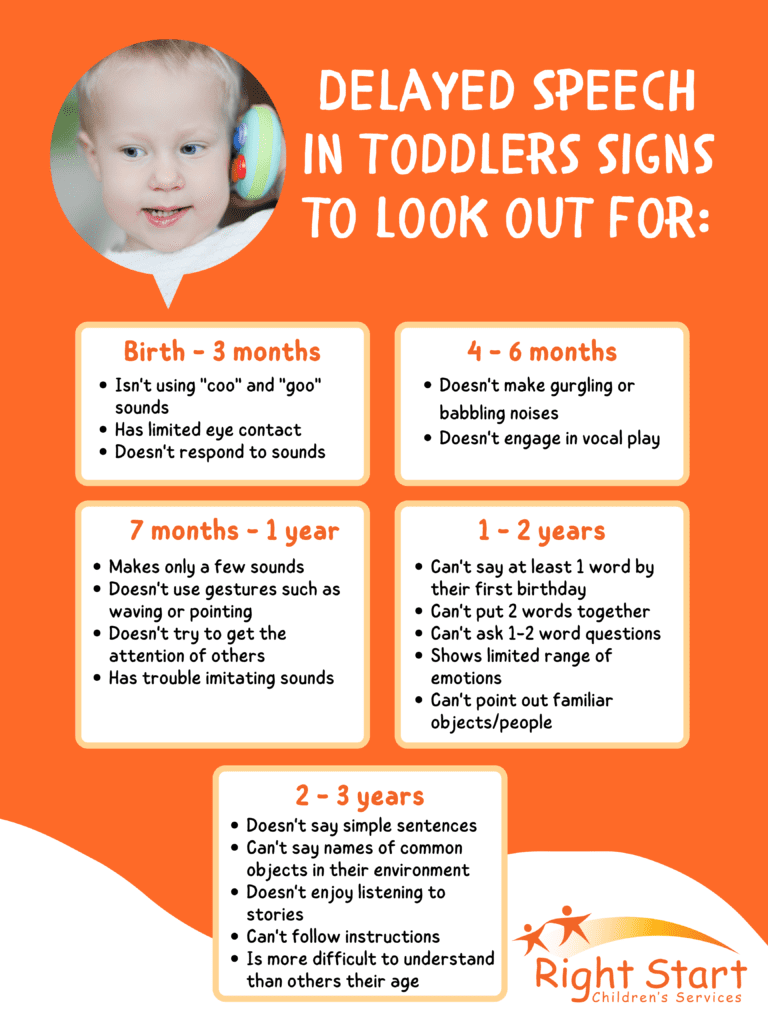
Credit: www.rightstartservices.com
Influence Of Genetics
Understanding the influence of genetics on speech delay can be both enlightening and reassuring. While environmental factors play a significant role, genetics can also shape how quickly a child begins to speak. Knowing this might ease some worries, especially if you suspect genetics might be a factor in your child’s speech development.
Genetic Predisposition
Genetic predisposition can impact speech development. If you or your partner experienced speech delays as children, there’s a possibility your child might face similar challenges. Observing family history can offer insights into potential genetic influences on speech.
Consider a family where both parents had speech delays as toddlers. Their child might show similar patterns, illustrating how genetics can influence speech progression. It’s not a definite outcome but understanding these patterns can guide you in seeking early intervention if needed.
Inherited Conditions
Some speech delays are linked to inherited conditions. Conditions like Down syndrome or Fragile X syndrome often come with speech and communication challenges. If these conditions run in your family, they might explain speech delays in your child.
A friend shared her experience with Fragile X syndrome impacting her nephew’s speech. This insight helped her approach speech therapy with a more tailored strategy. Knowing your family history can help you seek relevant medical advice and support.
Gene Mutations
Gene mutations can sometimes cause speech delays. Mutations in genes like FOXP2 are known to affect speech and language development. If you suspect a genetic cause, genetic testing can provide clarity and guide intervention strategies.
Imagine learning that a specific gene mutation is influencing your child’s speech. This knowledge empowers you to explore targeted therapies that address genetic factors directly. Would you consider genetic testing for a deeper understanding of your child’s speech delay?
Seeking Early Intervention
Recognizing genetic influences can motivate you to seek early intervention. Early speech therapy can make a significant difference, especially if genetic factors are at play. Waiting might not be the best approach when genetics are involved.
By seeking therapy early, you might find your child improving faster than expected. Have you considered the advantages of early intervention in your child’s speech development? Taking action could be the turning point for your child’s communication progress.
Role Of Environment
The environment plays a significant role in speech development. A child’s surroundings greatly influence their ability to learn and communicate. Family dynamics, language exposure, and daily interactions shape how speech is acquired. Understanding these elements can help identify factors contributing to speech delays.
Impact Of Family Interactions
Family interactions are crucial for speech development. Conversations within the family provide a foundation for language skills. When parents talk regularly with their children, it encourages verbal expression. Listening and responding to a child’s attempts at speech foster communication. Limited family interactions may hinder a child’s ability to develop language.
Exposure To Language
Language exposure is another key aspect. Children learn speech through hearing and mimicking sounds. A home rich in language enhances speech development. Reading books, singing songs, and storytelling introduce new words. These activities expand a child’s vocabulary. In environments with limited language exposure, speech delays can occur.
Hearing Impairments
Hearing impairments often cause speech delays in children. Limited hearing makes it hard to learn sounds. This affects speech development and communication skills. Early detection and support can help improve language abilities.
Hearing impairments can significantly impact a child’s ability to develop speech and language skills. When a child can’t hear well, it makes it challenging for them to mimic sounds, learn words, and engage in conversations. Understanding how hearing impairments contribute to speech delays is crucial for identifying and addressing potential issues early on.Understanding Hearing Loss In Children
Hearing loss in children can range from mild to profound. Some children may not hear certain sounds, while others might not hear anything at all. If you notice your child not responding to sounds or their name, it might be a sign of a hearing issue. Early detection is essential for effective intervention.Conducting Hearing Tests
Regular hearing tests can help identify problems that might not be visible. Pediatricians can conduct simple hearing screenings during routine check-ups. If there’s a concern, they might refer you to an audiologist for a more comprehensive evaluation. Testing ensures any hearing loss is addressed promptly, allowing your child to receive the support they need.Impact On Speech Development
Hearing impairments can delay the onset of babbling and first words. Children rely on hearing to learn how to form words and sentences. Without this ability, their speech development can lag behind their peers. Providing hearing aids or other support tools can help bridge this gap, enabling better speech progression.Access To Intervention And Support
Early intervention programs are vital for children with hearing impairments. These programs often involve speech therapy and the use of assistive devices. The sooner a child receives help, the better their chances of overcoming speech delays. Have you considered reaching out to local support groups or specialists who can guide you through this process?Encouraging Communication At Home
At home, create an environment that encourages communication. Speak clearly and maintain eye contact with your child. Use gestures and visual cues to reinforce words. Engaging in interactive play and reading can also stimulate language development. How can you make everyday interactions more enriching for your child’s speech journey? By focusing on these aspects, you can better support your child’s speech development journey. Understanding the impact of hearing impairments is the first step towards making informed decisions for their growth.Neurological Factors
Understanding what causes a speech delay can be complex, especially when neurological factors are involved. These are conditions affecting the brain that can significantly impact speech development. If your child struggles with speech, it’s crucial to look at these underlying factors. Let’s explore some key neurological conditions that can contribute to speech delays.
Autism Spectrum Disorders
Autism Spectrum Disorders (ASD) are a group of conditions that can greatly affect communication skills. Children with ASD often have difficulty with verbal and non-verbal communication. You might notice your child struggles to understand social cues or express themselves clearly. Early intervention can be crucial in helping your child develop better communication skills.
Consider a friend whose son was diagnosed with autism at a young age. They found that speech therapy was a game changer. It helped him learn techniques to express his needs and engage with others. Could speech therapy be a transformative tool for your child too?
Cerebral Palsy
Cerebral Palsy is another neurological condition that can affect speech. It’s caused by abnormal brain development or damage to the brain before, during, or after birth. Children with Cerebral Palsy may have difficulty controlling the muscles needed for speech. This can make speaking clearly a challenge.
Imagine the frustration of a child unable to communicate their thoughts due to muscle control issues. What if there were targeted exercises that could strengthen these muscles and improve speech clarity? Many parents have found hope in physical therapy tailored to their child’s needs.
When dealing with neurological factors, don’t underestimate the power of early diagnosis and intervention. Could understanding and addressing these factors be the key to unlocking your child’s communication potential?

Credit: www.sounderic.com
Physical Health Issues
Speech delay in children often stems from physical health issues. These issues can impact a child’s ability to produce sounds and words. Understanding them is crucial for early intervention and support.
Respiratory Problems
Respiratory problems can hinder a child’s speech development. Conditions like asthma or frequent colds affect breathing patterns. Breathing issues can lead to difficulties in speech production. A child may struggle to articulate words clearly.
Chronic respiratory problems might impact voice quality. They can cause fatigue and limit vocal endurance. This often affects how long a child can speak without strain. Parents should consult healthcare providers for proper diagnosis.
Oral-motor Challenges
Oral-motor challenges involve difficulty with mouth movements. These issues affect a child’s ability to form sounds. Problems with tongue, lips, and jaw movement can delay speech. Children may find it hard to coordinate these movements.
Weakness or coordination issues in oral muscles impact speech clarity. Therapy can help improve oral-motor skills. Early intervention can lead to better speech outcomes. Regular practice and exercises can strengthen these muscles.
Psychosocial Influences
Understanding speech delays involves exploring various factors. Psychosocial influences play a crucial role. These factors impact a child’s speech development. They encompass emotional and social aspects. By examining these, we gain insights into speech delays. Let’s delve deeper into these influences.
Emotional Well-being
Emotional health significantly affects speech development. Children need a supportive environment. A stable home fosters confidence. This promotes language learning. Stress and anxiety hinder speech progress. Consistent emotional support is vital. Encourage expression of feelings. This nurtures communication skills.
Social Interactions
Social interactions shape language abilities. Children learn by observing others. Engaging with peers enhances vocabulary. Limited interaction slows language growth. Social play is essential. It boosts communication skills. Encourage group activities. Children thrive in interactive settings. Facilitate playdates and group learning.
Impact Of Bilingualism
Bilingualism may sometimes contribute to speech delay in children. Learning two languages can slow vocabulary acquisition. This is normal and usually temporary as children build skills in both languages.
The impact of bilingualism on speech development can be both fascinating and complex. Many parents eagerly introduce a second language to their children, hoping to give them a head start in our globalized world. However, they often wonder if this choice might delay their child’s speech development. Let’s explore this intriguing topic and see what factors come into play.Understanding Bilingualism In Early Childhood
Bilingualism isn’t just about speaking two languages; it involves using them in different contexts. Children learning two languages simultaneously may mix words or grammar rules. This mixing is normal and doesn’t necessarily mean a delay. Early exposure to multiple languages can enrich cognitive abilities. These include problem-solving skills and creativity. Don’t worry if your child seems to take longer to speak clearly in both languages—they’re learning to navigate a more complex linguistic environment.Is Mixing Languages A Sign Of Delay?
Mixing languages is a common concern among parents. It might look like a delay, but it’s often a natural part of bilingual language development. Children might use words from both languages in the same sentence. This mixing shows that your child’s brain is actively sorting through two linguistic systems. Over time, as vocabulary grows, they will start to separate the languages more clearly.The Role Of Language Exposure
The amount and quality of exposure to each language play a crucial role. If one language is less dominant at home, a child might develop it more slowly. Ensure balanced exposure through books, songs, and conversations. Engage your child in both languages regularly. Use everyday interactions as opportunities for practice and exposure. This balanced approach can help reinforce vocabulary and fluency in both languages.How Professionals View Bilingual Speech Development
Speech therapists recognize bilingualism as a unique developmental path. Professionals consider the entire language environment of the child. They assess whether any delay is due to bilingualism or other factors. If you’re concerned about a speech delay, consult a speech therapist with experience in bilingual development. They can offer tailored strategies to support your child’s language growth.Personal Insights: Learning From Experience
I remember my friend worrying about her bilingual daughter mixing words at age three. Despite the mix, her daughter was incredibly expressive. By age five, she fluently switched between languages, impressing everyone. This personal story highlights that, while it may seem like a delay, bilingual children often catch up and excel. Patience and encouragement are key. Are you curious about how bilingualism might affect your child’s speech development? Consider these insights and strategies. Remember, bilingualism is a gift that can enrich your child’s life in countless ways.Early Intervention Strategies
Early intervention plays a key role in addressing speech delays. Starting early can help children develop essential communication skills. Parents and caregivers can support speech development through targeted strategies. These strategies can enhance a child’s ability to communicate effectively.
Identifying Speech Delays Early
Recognizing signs of speech delay is crucial. Some children may not meet typical milestones. Monitoring these milestones helps in identifying potential delays. Early detection allows for quicker intervention.
Engaging In Regular Conversations
Engage your child in daily conversations. Use simple words and phrases. Encourage them to respond, even with gestures. This practice nurtures their communication skills.
Reading Aloud To Your Child
Reading books together can boost vocabulary. Choose age-appropriate and colorful books. Discuss pictures and ask questions. This activity promotes language comprehension.
Utilizing Visual Aids And Gestures
Visual aids support understanding. Use pictures and objects to explain words. Gestures can also enhance communication. They help in associating words with actions.
Encouraging Imitation And Repetition
Imitation is a powerful learning tool. Encourage your child to mimic sounds and words. Repetition strengthens memory and speech skills. Praise attempts to motivate further efforts.
Seeking Professional Guidance
Consult a speech therapist for expert advice. Professionals can tailor strategies to your child’s needs. Regular sessions can provide significant improvement. They guide both children and parents effectively.

Credit: therapyandwellnessconnection.com
Frequently Asked Questions
What Is The Most Common Cause Of Speech Delay?
The most common cause of speech delay is hearing loss, affecting a child’s ability to learn and mimic sounds. Early intervention and regular hearing checks are crucial. Other factors include autism, developmental disorders, and environmental influences like limited exposure to language and conversation.
Consult a healthcare professional for accurate diagnosis and guidance.
Is It The Parents’ Fault For Speech Delay?
Speech delay isn’t always the parents’ fault. Factors like genetics, environment, and medical conditions can influence speech development. Parents can support their child’s language growth through interaction, reading, and communication. Consulting a speech therapist can help identify underlying causes and provide guidance for improvement.
How Does A Child Get Speech Delay?
Speech delay in children can result from hearing issues, developmental disorders, or lack of interaction. Environmental factors like limited social exposure and genetic influences also play roles. Early intervention and professional assessment can help identify and address underlying causes effectively.
Can A Child With Speech Delays Catch Up?
Yes, children with speech delays can catch up with proper intervention. Early support from speech therapists and educators often helps improve communication skills. Engaging in interactive activities and promoting a language-rich environment at home can accelerate progress. Regular monitoring ensures timely adjustments to therapy plans, aiding development effectively.
Conclusion
Understanding speech delay helps address concerns early. Early intervention makes a difference. Various factors contribute to speech delays. Genetics, hearing issues, or environmental factors play a role. Professional guidance offers clarity and support. Speech therapy can be effective. Parents and caregivers should stay informed.
Encouragement and patience are key. Every child develops at their own pace. Support your child with love and understanding. Seek help if you notice persistent delays. Your involvement matters greatly. A nurturing environment fosters progress. Remember, each small step counts.
Stay positive and proactive. Your child’s communication journey is unique.