Are you worried about your child’s speech development? Do you find yourself wondering if their speech delay is linked to something more, like autism?
You’re not alone. Many parents are in the same boat, searching for answers and guidance. Understanding the connection between speech delays and autism can feel overwhelming, but it’s crucial for your child’s well-being. We’ll unravel the mystery surrounding speech delays and their potential link to autism.
You’ll gain insights that can help you make informed decisions for your child’s future. Stay with us as we explore this important topic, offering you clarity and peace of mind.
Speech Delay In Children
Many parents notice their child’s speech develops later than peers. Speech delay can lead to concerns about communication skills and overall development. Speech delay in children might have several causes. It’s important to understand these to help address the issue effectively.
Common Causes Of Speech Delay
Speech delay can stem from various factors. Hearing loss is a common cause. If a child can’t hear well, learning to speak becomes challenging. Another cause might be oral-motor problems. This affects the mouth’s ability to produce speech sounds. Sometimes, environmental factors play a role. Limited interaction or exposure to language can delay speech.
Neurological issues can also affect speech development. Autism Spectrum Disorder is one such condition. Children with autism might face challenges in speech and communication. Identifying the underlying cause is crucial. Early intervention can make a big difference in a child’s progress.
Developmental Milestones In Speech
Children typically reach certain speech milestones as they grow. By age one, most children say simple words like “mama” or “dada.” By two years, they often form two-word sentences. By age three, children usually speak in full sentences and understand basic grammar. These milestones help track a child’s speech development.
If a child misses these milestones, it might indicate a delay. Parents should consult a healthcare professional for guidance. Early detection and support are key to addressing speech delays effectively. Encouraging a language-rich environment at home can also aid development.
Credit: www.stamurai.com
Autism Spectrum Disorder
Autism Spectrum Disorder (ASD) affects communication and behavior. It varies widely among individuals. Some people with autism may excel in specific skills. Others may struggle with daily tasks. Understanding autism is key to supporting those affected.
Characteristics Of Autism
Autism affects social skills, speech, and nonverbal communication. People with autism may prefer routines. They might also have repetitive behaviors. Each person with autism is unique. Their strengths and challenges can differ greatly.
Early Signs Of Autism
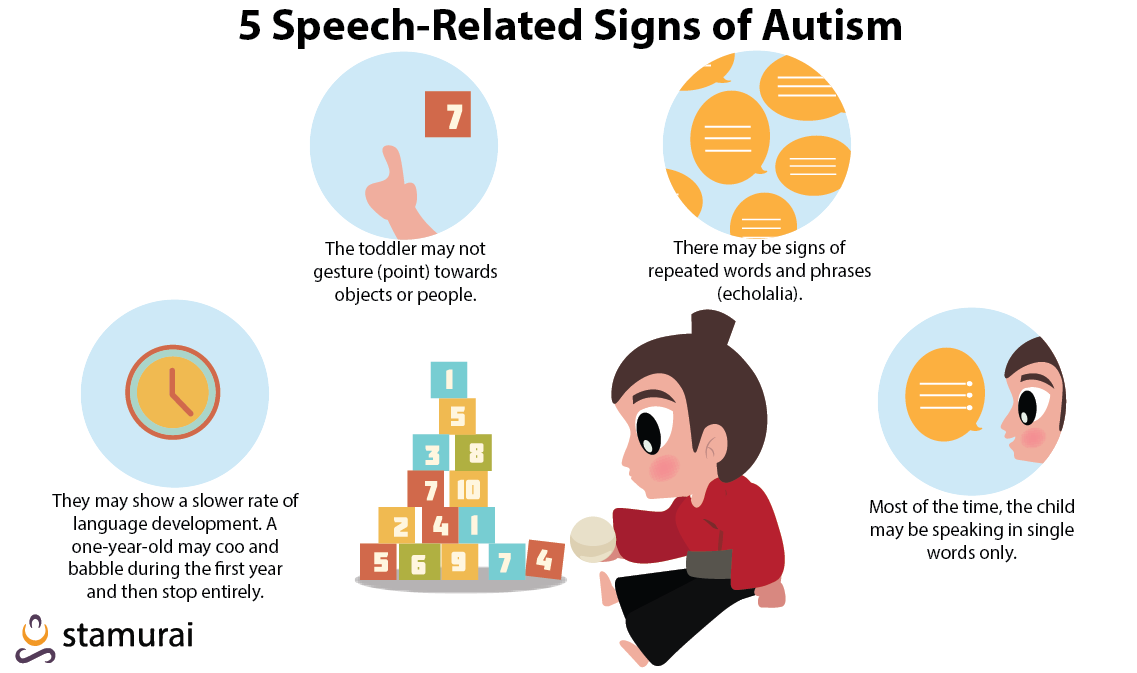
Early signs of autism can appear by 18 months. Parents may notice a lack of eye contact. Delayed speech development is common. Some children may not respond to their name. Unusual play habits can also be a sign. Recognizing these signs early helps in seeking support.
Speech Delay And Autism
Speech delays can be a puzzling issue for many parents. You might notice your child isn’t talking as much as their peers. Perhaps they’ve yet to say their first word or struggle to form sentences. It’s natural to wonder if this speech delay is a sign of something larger, such as autism. Understanding the connection between speech delay and autism can help you navigate this complex terrain.
Correlation Between Speech Delay And Autism
Speech delay is common in children with autism. Many parents find themselves asking if a delay in speech is a direct indicator of autism. While it’s true that many autistic children experience speech delays, it’s important to remember that not all speech delays are linked to autism.
Autism can affect communication in various ways. Some children may be nonverbal, while others might have a rich vocabulary but struggle with social nuances. If your child has a speech delay, consider if they also have difficulties with social interactions or repetitive behaviors. These can be indicators worth discussing with a healthcare professional.
Speech Characteristics In Autistic Children
Children with autism often have unique speech characteristics. You might notice that your child repeats words or phrases frequently. They might use echolalia, where they mimic phrases they’ve heard, without understanding their meaning.
Some autistic children have a monotone speech pattern or unusual pitch. They may struggle with understanding abstract language or jokes. These speech characteristics can affect how they communicate with peers and adults.
Have you ever tried communicating with someone who just doesn’t get jokes? It can be frustrating for both parties. Understanding these speech traits can help you support your child better.
So, what can you do? Engage with your child using simple, clear language. Encourage communication through play and daily activities. If you feel overwhelmed, seek guidance from speech therapists who specialize in autism.
Have you noticed any speech characteristics in your child? Reflect on these and consider how they might impact their daily interactions. Your awareness and proactive approach can make a significant difference in your child’s communication journey.
Diagnosis And Assessment
Understanding the relationship between speech delay and autism can be challenging. Parents often worry about their child’s development. Diagnosing speech delay requires careful observation. Assessing whether it is part of autism involves detailed evaluation.
Evaluating Speech Delay
Speech delay can manifest in various forms. Some children might have trouble forming words. Others might struggle with sentence structure. Identifying speech delay early helps in planning treatment. Speech therapists play a key role in evaluation. They observe the child’s communication skills. They assess the child’s ability to understand and use language. Speech delay evaluation includes examining listening skills. It also covers the child’s ability to express ideas.
Screening For Autism
Screening for autism involves a series of tests. Specialists look at the child’s social interactions. They assess communication methods. Autism screenings often include behavioral observations. Specialists check for repetitive behaviors. They examine how the child interacts with others. Early screening helps in getting timely support. Autism screenings may include parent interviews. They provide insights into the child’s behavior at home.
Therapeutic Interventions
Therapeutic interventions play a crucial role in addressing speech delay. These interventions focus on improving communication skills in children with autism. Early and effective therapy can make a significant difference. It helps children express themselves better and interact with others.
Speech Therapy Techniques
Speech therapy offers various techniques to support children with autism. One method involves teaching basic communication skills. Therapists use visual aids and gestures to help children understand words. Another approach is using repetition to reinforce learning. This method helps children remember words and phrases. Interactive games also play a part in speech therapy. These games make learning enjoyable and engaging.
Approaches To Autism Treatment
Several approaches address autism-related challenges. Behavioral therapy focuses on improving social skills. It helps children learn to express emotions appropriately. Occupational therapy targets sensory issues. This therapy aids in better processing of sensory information. Play therapy encourages interaction through fun activities. It helps children develop social connections. Each approach is tailored to meet individual needs. Parents and therapists work together to find the best strategy.
Credit: www.mywellnesshub.in
Supporting Families
Supporting families with children experiencing speech delay and autism is crucial. Parents often feel overwhelmed and uncertain. They need guidance and encouragement. Understanding their journey helps in providing better support. Families require resources and an inclusive environment to thrive. Below are ways to assist families effectively.
Resources For Parents
Parents need reliable information about speech delay and autism. Educational materials are essential. Books, online articles, and workshops can help. Support groups offer valuable insights. Sharing experiences with others reduces stress. It creates a community of understanding. Professional guidance is also important. Speech therapists and counselors provide expert advice. They help parents develop effective strategies.
Creating An Inclusive Environment
Inclusive environments support children with speech delays and autism. Schools should promote acceptance. Teachers can adapt lessons for diverse needs. Visual aids and simple instructions help comprehension. Playgroups encourage social interaction. Children learn from each other naturally. At home, create a supportive space. Consistent routines provide comfort and stability. Encourage communication through games and activities. Celebrate small achievements to boost confidence.
Frequently Asked Questions
What Are The Three Main Symptoms Of Autism?
The three main symptoms of autism include difficulty in social interaction, challenges with communication, and repetitive behaviors or restricted interests. These symptoms can vary in intensity and presentation among individuals. Early diagnosis and intervention can significantly help in managing autism effectively.
How Do I Know If My Child Has Autism?
Look for signs like delayed speech, lack of eye contact, repetitive behaviors, and difficulty in social interactions. Consult a healthcare professional for a proper diagnosis if you notice these symptoms. Early intervention can help improve outcomes for children with autism.
How To Know If It’s Speech Delay Or Autism?
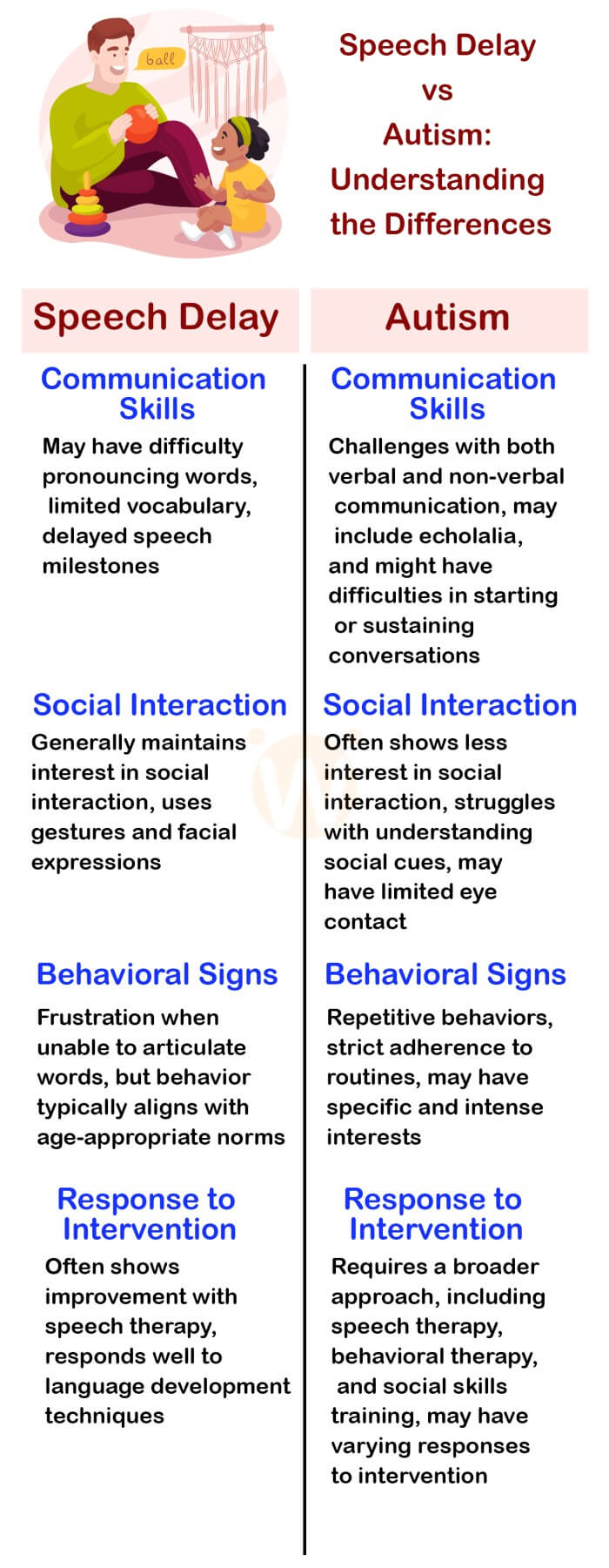
Observe social interaction and communication skills. Speech delay involves language only, while autism affects social behaviors and interests. Consult a specialist for accurate diagnosis. Early intervention can help improve outcomes.
At What Age Does An Autistic Child Speak?
Autistic children may begin speaking at different ages. Some might start around 2-3 years, while others could take longer. Speech development varies widely among autistic individuals, and early intervention can help improve communication skills. Consult a healthcare professional for personalized guidance and support.
Conclusion
Understanding speech delay and autism is crucial for parents. Not all children with speech delays have autism. Each child is unique. Early intervention is key. Seek professional guidance if concerned. Trust your instincts as a parent. Knowledge empowers families. Being informed helps in making better decisions.
Don’t hesitate to ask questions. Support is available. Remember, every child develops at their own pace. Patience and love make a big difference. Stay hopeful and proactive on this journey. Your involvement matters.