
Have you ever wondered if a simple blanket could transform your world or the world of someone you love? If you’re navigating the complex and often overwhelming journey of autism, you might be searching for tools that bring comfort and calm.
Weighted blankets are gaining attention as a potential ally for autistic individuals, promising to offer a sense of security and tranquility. But do they really work? And more importantly, are they the right fit for you or your loved one?
Before you invest in this cozy solution, let’s explore the science, benefits, and considerations that could make a weighted blanket a game-changer in your life. Stay with us to uncover how this seemingly simple product could make a significant difference.

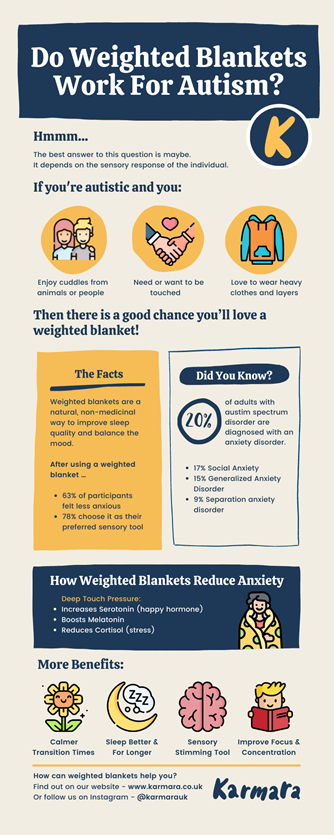
Credit: karmara.co.uk
What Are Weighted Blankets?
Weighted blankets have gained popularity in recent years, especially among individuals with autism. But what exactly are weighted blankets, and why are they so beneficial? Imagine a comforting hug that lasts all night long; that’s what these blankets aim to provide. They are designed to offer a sense of calm and relaxation, making them particularly appealing to those who struggle with anxiety or sensory processing issues.
Design And Materials
Weighted blankets are made with a variety of materials to ensure comfort and durability. Typically, they contain small glass beads or plastic pellets sewn into pockets or layers within the blanket. This construction helps distribute weight evenly across your body.
The outer fabric can vary from cotton to fleece, allowing you to choose based on your preference for warmth or breathability. Some blankets even feature removable covers for easy cleaning.
Purpose And Function
The main purpose of a weighted blanket is to provide deep pressure stimulation. This sensation mimics the feeling of being held or hugged, offering a soothing effect. Many find this pressure helps reduce feelings of anxiety and improves sleep quality.
For autistic individuals, the consistent weight can help ground them, reducing sensory overload and enhancing focus. Have you ever felt overwhelmed by too much sensory input? A weighted blanket might be your key to finding calm.
Considering the design and function, weighted blankets are more than just a cozy addition to your bedroom. They serve a practical purpose, particularly for those with autism. By choosing the right materials and understanding their unique benefits, you can find a blanket that suits your needs and lifestyle.
Sensory Challenges In Autism
Autism spectrum disorder (ASD) presents unique sensory challenges. These can affect daily life and comfort. Individuals with autism often experience sensory processing differences. Sensory input can be overwhelming or underwhelming. This can lead to stress or anxiety. Understanding these sensory challenges is crucial. It helps in finding effective solutions, such as weighted blankets.
Understanding Sensory Processing
Sensory processing involves interpreting sensory information. This includes sounds, sights, and textures. For autistic individuals, this process is different. Some are hypersensitive to stimuli. Others might be hyposensitive. Bright lights or loud noises can be distressing. Soft touches may feel irritating or even painful. Each individual has unique sensory preferences. Recognizing these can improve comfort and well-being.
Impact On Daily Life
Sensory challenges can affect daily activities. Simple tasks may become difficult. Brushing teeth or wearing certain clothes can be uncomfortable. Sensory overload can lead to meltdowns. It can also cause withdrawal or avoidance behaviors. These challenges impact social interactions. They may affect school or work performance too. Supportive tools like weighted blankets can help. They provide deep pressure stimulation. This can calm the nervous system.
How Weighted Blankets Work
Weighted blankets offer comfort through gentle pressure, helping calm the nervous system. They may be beneficial for autistic individuals by providing soothing sensory input. This sensory comfort can potentially ease anxiety and improve sleep quality.
Weighted blankets have become increasingly popular among autistic individuals, offering a comforting embrace that can help soothe sensory sensitivities. You might be curious about how these blankets work to provide such benefits. Let’s dive into the science behind it.
Deep Pressure Stimulation
Weighted blankets are designed to offer deep pressure stimulation, similar to the feeling of a gentle, firm hug. This is known to trigger the release of serotonin, a hormone that helps regulate mood and relaxation. The pressure applied by the blanket evenly across your body can help you feel more grounded and secure. Imagine a comforting hand on your shoulder during a stressful moment; weighted blankets aim to replicate that reassuring sensation.
Calming Effects On The Nervous System
The nervous system can become overwhelmed by external stimuli, especially for those with autism. Weighted blankets help calm this overactivity by reducing cortisol levels, a stress hormone. As the blanket wraps around you, it sends signals to your brain that it’s safe to relax, easing anxiety and promoting restful sleep. Have you ever noticed how a warm bath can help you unwind? Weighted blankets can have a similar calming effect on your nervous system, providing a cocoon of tranquility.
Have you tried using a weighted blanket yet? How did it feel? Whether you’re seeking peace of mind or a good night’s sleep, weighted blankets might be worth exploring.
Benefits For Autistic Individuals
Weighted blankets have gained attention for their calming effects. Autistic individuals can benefit significantly from these blankets. They provide deep pressure stimulation. This can help in managing sensory issues. Let’s explore some key benefits.
Improved Sleep Quality
Many autistic people struggle with sleep problems. Weighted blankets can help improve sleep. The gentle pressure mimics a comforting hug. This can encourage relaxation and better sleep quality. It can also help regulate sleep patterns.
Reduced Anxiety And Stress
Anxiety is common among autistic individuals. Weighted blankets can help reduce anxiety levels. The deep pressure touch provides a sense of security. This can lead to lower stress and anxiety. It can also help in calming the nervous system.
Enhanced Focus And Attention
Maintaining focus can be challenging for autistic people. Weighted blankets can help improve concentration. The calming effect aids in reducing distractions. This can support better focus and attention in tasks. It helps in creating a soothing environment.
Scientific Studies And Evidence
Weighted blankets have gained attention for their potential benefits. They are especially noted for their calming effects on autistic individuals. Scientific studies aim to provide evidence for these benefits. Researchers have conducted various studies to understand the impact of weighted blankets. This section explores the findings and limitations of such studies.
Research Findings
Some studies show positive results with weighted blankets. They suggest improvement in sleep quality for autistic people. A study published in the “Journal of Autism and Developmental Disorders” highlighted reduced anxiety levels. Another research noted increased feelings of safety and comfort. These findings support the calming claims of weighted blankets.
Research also indicates an improvement in focus. Individuals reported feeling more grounded and relaxed. This can be particularly beneficial for children with autism. The sensory input from the weight helps them feel more secure.
Limitations Of Current Studies
Despite promising results, there are limitations. Many studies have small sample sizes. This limits the generalizability of the findings. The duration of most studies is also short. Long-term effects are still unknown.
Another limitation is the lack of controlled environments. Many studies rely on subjective reports from participants. Objective measurements are often absent. This can lead to biased results.
These limitations suggest a need for more comprehensive research. Larger and longer studies are necessary. This will help in understanding the true impact of weighted blankets on autism.

Credit: harkla.co
Considerations For Use
Weighted blankets offer comfort to many people with autism. They provide a sense of security and calmness. But, not every weighted blanket suits everyone. There are key factors to consider before using one. This ensures the best experience and safety.
Choosing The Right Blanket
Choosing a weighted blanket depends on weight and size. A common guideline suggests a blanket 10% of the user’s body weight. This ensures the blanket is neither too heavy nor too light. The size should cover the body comfortably without dragging. Material matters, too. Some prefer cotton, others like fleece. Consider the user’s sensory preferences.
Potential Risks And Precautions
Weighted blankets are generally safe, but precautions are necessary. They might pose risks for children or individuals with certain medical conditions. Breathing difficulties can arise if the blanket is too heavy. Always consult a healthcare professional before use. Check for any allergies to blanket materials. Regularly inspect the blanket for wear and tear. Safety should always come first.
Real-life Experiences
Weighted blankets can offer comfort to autistic individuals by simulating a gentle, calming hug. Many people report they help reduce anxiety and improve sleep. Their deep pressure can provide a soothing effect, making daily life more manageable.
### Real-Life Experiences Weighted blankets have become a popular tool for individuals with autism, offering a comforting sense of security. Many families have shared their stories, highlighting the profound impact these blankets have had on their loved ones. But what do these experiences truly entail, and how do they translate into real-world benefits?
Testimonials From Families
Families often describe the weighted blanket as a game-changer. One mother shared how her son, who struggled with nightly restlessness, now sleeps through the night. The gentle pressure of the blanket seems to calm his sensory overload, allowing him to relax. Another parent mentioned their daughter’s improved focus during study time. The blanket helps her stay grounded and less distracted, making homework sessions more productive. It’s not just about sleep; the weighted blanket has become a versatile tool for various aspects of daily life. Have you considered how such a simple addition could enhance your routine?
Expert Opinions
Experts in autism therapy and sensory processing often support the use of weighted blankets. Occupational therapists point out the deep pressure stimulation as a key factor in promoting calmness. This technique is akin to a firm hug, which many individuals find soothing. Pediatricians have observed a reduction in anxiety-related behaviors in children using weighted blankets. However, they also caution that it’s essential to choose the right weight and size for each individual. Could this practical tool be the missing piece in your approach to managing sensory challenges? Experts suggest starting with a blanket that’s around 10% of the person’s body weight to ensure comfort and effectiveness. These real-life experiences and expert insights underscore the potential benefits of weighted blankets for individuals with autism. Have you tried one yet?
Alternatives And Complementary Therapies
Weighted blankets provide comfort for autistic individuals by using gentle pressure to reduce anxiety and stress. They may enhance sleep quality, making daily tasks easier. Exploring alternatives and complementary therapies can offer additional benefits for managing autism symptoms.
Weighted blankets have become a popular tool for people with autism, offering a sense of calm and comfort. However, they are just one piece of the puzzle. Exploring alternatives and complementary therapies can open up a world of possibilities to enhance well-being and improve daily life. Let’s dive into some practical solutions that could work alongside or instead of weighted blankets.
Other Sensory Tools
If a weighted blanket isn’t quite the right fit, there are many other sensory tools available that might resonate better with you or your loved one. Consider items like sensory swings, which provide gentle motion, or noise-canceling headphones to reduce overwhelming sounds. Fidget toys can also offer a tactile experience that helps with focus and relaxation. Experiment with different items and observe the effects. What brings a smile or a sense of calm? Sometimes, the simplest tool can make a big difference in managing sensory needs. Keep an open mind and try out various options until you find the right match.
Combining Therapies For Best Results
Have you thought about how combining therapies could maximize benefits? For instance, pairing a sensory tool with occupational therapy might enhance overall outcomes. Occupational therapists often have insights into how to tailor sensory inputs to individual needs. Engage with professionals who can guide you in blending therapies. A holistic approach often leads to better results, as it addresses multiple aspects of sensory processing. Don’t hesitate to ask questions and be proactive in seeking solutions that work best for you. The journey is unique for everyone. While some may find solace in a single tool, others thrive with a combination. Stay curious and keep exploring different avenues. After all, finding what works best can lead to a more comfortable and fulfilling life.
Future Research Directions
Exploring the effectiveness of weighted blankets for autistic individuals is crucial. Research may focus on improving comfort and sensory support. Understanding individual needs and preferences could enhance the benefits of these blankets.
The use of weighted blankets has gained attention for their potential benefits in helping autistic individuals. These blankets are believed to offer comfort and reduce anxiety through deep pressure stimulation. But what does the future hold for research in this area? As more people become aware of their potential, it’s crucial to explore new directions to truly understand their impact.
Areas Needing More Study
Current research on weighted blankets and autism is still in its early stages. Most studies have small sample sizes and varied methodologies. This makes it difficult to draw definitive conclusions. More comprehensive studies with larger groups are needed to determine how different weights and materials might affect users. Have you ever wondered if a weighted blanket’s effectiveness changes with age? Children and adults might respond differently, and this is an area ripe for exploration. Moreover, understanding the long-term impacts of consistent use can offer valuable insights for caregivers and therapists.
Innovations In Sensory Therapies
The field of sensory therapies is evolving rapidly, and weighted blankets are just one piece of the puzzle. Imagine combining them with other sensory aids like noise-canceling headphones or tactile toys. This integration could create a multi-sensory experience, potentially enhancing therapeutic outcomes. Technology could also play a role in future innovations. Smart blankets that adjust their weight or temperature could cater to individual needs in real-time. Have you ever thought about how customizable sensory therapies might change daily routines for autistic individuals? This is a promising avenue for researchers to explore. Looking ahead, what do you think are the most important questions that need answering? Your curiosity and feedback can drive the research community toward discoveries that make a real difference.
Credit: livingautism.com
Frequently Asked Questions
Are Weighted Blankets Good For Autistics?
Weighted blankets can benefit autistic individuals by providing calming sensory input. They help reduce anxiety and improve sleep quality. These blankets apply gentle pressure, promoting relaxation and a sense of security. It’s essential to choose the right weight for effectiveness and comfort.
Who Should Not Use A Weighted Blanket?
Individuals with respiratory issues, sleep apnea, or claustrophobia should avoid weighted blankets. Children under two years old shouldn’t use them. People with mobility problems or those who can’t remove the blanket independently also need to avoid them. Always consult a healthcare professional before use.
Why Do Autistic People Like Weighted?
Autistic people often enjoy weighted items because they provide deep pressure stimulation. This sensory input can help reduce anxiety and promote relaxation. Weighted blankets or vests can create a calming effect, improving focus and comfort. The even pressure helps regulate sensory processing, making them appealing to individuals with autism.
Were Weighted Blankets Invented For Autism?
Weighted blankets were initially designed to help individuals with autism. They provide a calming effect by applying gentle pressure. This therapeutic tool has since gained popularity for improving sleep and reducing anxiety in the general population. They are now widely used beyond autism therapy.
Conclusion
Weighted blankets can offer comfort to autistic individuals. They help calm anxiety and stress. These blankets provide gentle pressure, promoting relaxation. Users often feel more secure and grounded. Families have noticed better sleep patterns. They may improve focus and reduce meltdowns.
Always consult with a healthcare professional first. Personal experiences vary, so it’s important to test first. Consider individual needs and preferences for the best results. Weighted blankets could be a valuable tool for some. Explore more options and find what suits you best.