Imagine eagerly waiting for your little one to say their first words, only to find that the words come slower than expected. It’s natural to feel concerned when your 2-year-old isn’t talking as much as their peers.
You’re not alone in this journey. Many parents share the same worries and questions. Understanding the causes of speech delay in toddlers can be crucial in helping them develop strong communication skills. This article will explore the common reasons behind speech delays and offer insights into how you can support your child’s language development.
Curious to know more? Let’s delve into the factors that might be influencing your child’s speech and how you can make a difference.

Credit: www.happiesthealth.com
Developmental Milestones
Watching your toddler grow is an exciting journey filled with anticipation for each new skill they acquire. Speech is one of those critical milestones that parents eagerly await. By age two, children typically start to communicate more effectively, forming simple sentences and expressing their needs. Understanding these milestones helps you track your child’s progress and identify any potential delays early on.
Typical Speech Progression
At two years old, your child should be expanding their vocabulary with around 50 words and starting to combine them into two-word phrases, like “more milk” or “big truck.” They enjoy imitating sounds and words, which is why you often hear them repeating phrases you say. This stage is crucial for laying the foundation of speech and language development.
During this time, toddlers also begin to understand more than they can express. They can follow simple instructions, like “give me the ball” or “come here.” Their ability to comprehend language often surpasses their ability to speak it. This comprehension is a key indicator of healthy speech progression.
Signs Of Delay In Toddlers
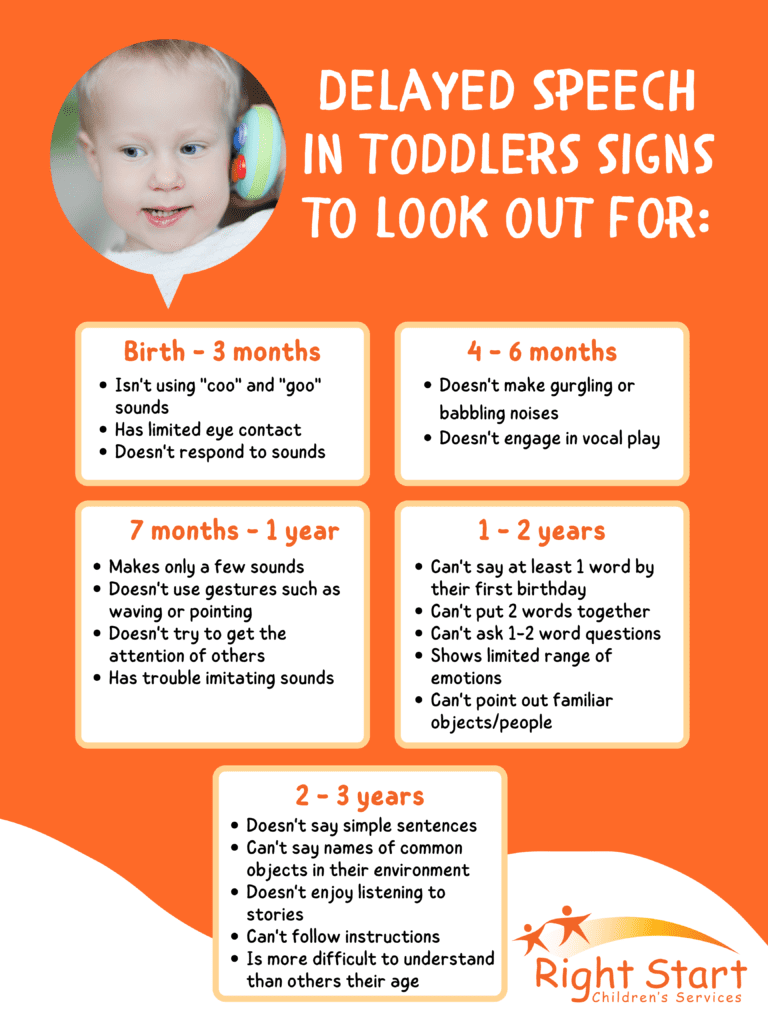
If your child isn’t reaching these milestones, it might be time to consider whether there’s a speech delay. Does your toddler have less than 50 words or struggle to form simple phrases? If they aren’t trying to imitate sounds or seem uninterested in communicating, these could be signs of a delay.
Another aspect to watch is their ability to follow directions. If your toddler doesn’t respond to simple requests or seems to have difficulty understanding, it could indicate a speech delay. It’s important to remember that every child develops at their own pace, but knowing what to look for can help catch any delays early.
Have you noticed any of these signs in your child? Reflect on your interactions with them. Are they engaging with you verbally, or do they seem frustrated with their communication abilities? Identifying these signs early can make a significant difference in getting the right support.
Understanding the typical progression and recognizing signs of delay can empower you to take action. If you suspect a delay, consider speaking with a pediatrician or a speech therapist who can provide guidance and support. Remember, early intervention can pave the way for smoother communication development.

Credit: www.sounderic.com
Physical Factors
Speech delay in toddlers can have several underlying causes. Physical factors play a significant role. Understanding these factors is crucial for parents and caregivers. Early intervention can make a difference.
Hearing Impairments
Hearing issues can impact speech development in young children. If a child struggles to hear sounds clearly, they might find it hard to mimic them. Ear infections or congenital issues often cause hearing problems. Regular hearing checks can identify these issues early. Treatment plans, if needed, can then be initiated.
Oral-motor Difficulties
Oral-motor difficulties affect a child’s ability to produce speech. This involves the movement of the lips, tongue, and jaw. If these parts don’t work together properly, it can slow speech development. Children may face challenges in forming specific sounds or words. Specialized therapies can aid in improving these motor skills.
Environmental Influences
Understanding the causes of speech delay in 2-year-olds can be quite challenging. One significant factor is environmental influences, which play a crucial role in shaping a child’s speech development. These influences can vary, ranging from the language exposure a child receives to the dynamics within their family. By exploring these aspects, you can gain valuable insights into how they might impact your child’s speech progress.
Language Exposure
The amount and quality of language a child is exposed to can greatly affect their speech development. Imagine growing up in a household where conversations are minimal or absent. Such an environment can limit your child’s opportunity to learn and mimic words. Frequent interactions and storytelling sessions can enhance vocabulary acquisition.
Consider how often you converse with your child. Do you read books together or narrate your daily activities? These simple actions can boost their language skills. Encouraging questions and engaging in dialogue can make learning conversational skills enjoyable and effective.
Family Dynamics
Family dynamics can shape a child’s speech development significantly. If your household is bustling with activity and chatter, your child may have more chances to hear and practice language. On the flip side, if the family communicates less or relies heavily on technology, verbal exchanges may be limited.
Reflect on how communication flows in your family. Are family members actively engaging each other in conversations? Creating a nurturing and talkative environment can encourage your child to express themselves more freely. Observing how your family interacts can offer clues into how this impacts your child’s speech.
Think about the role you play in your child’s speech journey. How can you foster more language-rich interactions in daily routines? Small changes can lead to significant improvements in your child’s ability to communicate.
Is your child receiving the language exposure they need to thrive? Understanding and adapting your environment can be a key step in supporting their speech development.
Cognitive And Neurological Conditions
Cognitive and neurological conditions can affect a child’s speech development. These conditions impact brain functions and cognitive abilities. Understanding these can help in supporting a child’s communication skills.
Autism Spectrum Disorders
Autism Spectrum Disorders (ASD) can lead to speech delays in children. Children with ASD might have difficulty with social interactions. They may also struggle with understanding language. Some might not respond to their name or use gestures. This can make verbal communication challenging for them.
Intellectual Disabilities
Intellectual disabilities can also cause speech delays in children. These disabilities affect cognitive functioning and learning abilities. Children with intellectual disabilities may learn to speak later than peers. They may have trouble forming sentences or pronouncing words. Early intervention can help improve their communication skills.
Psychosocial Factors
Psychosocial factors play a significant role in speech development for toddlers. These elements are often overlooked but can have a profound impact on a child’s ability to communicate effectively. By understanding these factors, you can better support your child’s speech growth.
Emotional Stress
Emotional stress can greatly affect a 2-year-old’s speech progression. Consider moments when your child appears anxious or upset; these emotions can hinder their willingness to communicate. Stressful situations at home, such as parental conflict or a change in routine, can contribute to speech delays. Observing your child’s reactions to different scenarios can help you identify stressors.
Providing a calm and supportive environment is crucial. Simple actions like maintaining a routine and offering reassurance can lessen stress. Have you noticed your child speaking more clearly during relaxed family outings or quiet evenings? These moments provide valuable insight into how reducing stress can aid speech development.
Social Interactions
Social interactions are vital for speech development. Your child’s conversations with siblings, relatives, and peers shape their communicative skills. Engaging in diverse social settings, such as playgroups or family gatherings, can enhance speech. These interactions introduce new vocabulary and encourage expressive language.
Encourage your child to participate in group activities. Have you observed how your child mimics phrases or gestures from other children? These imitations are stepping stones in speech learning. Regular social engagement fosters confidence and helps your child articulate thoughts better. Reflect on how varied social experiences can enrich your child’s speech.
Incorporating these psychosocial insights into your daily routine can make a noticeable difference in your child’s speech development journey. Are there specific stressors or social settings you can adjust to support your child’s communication skills? Your involvement can unlock their potential for clearer and more confident speech.
Role Of Genetics
The role of genetics in speech delay among toddlers is significant. Understanding how genetics affects speech can offer insights into possible causes. This knowledge can help parents seek early intervention if needed.
Hereditary Speech Challenges
Hereditary factors can influence speech development. If a parent had speech delays, their child might too. Genetic traits can pass down through generations, affecting speech patterns. These inherited traits can lead to similar challenges in children.
Family history plays a crucial role. Speech and language issues can run in families. Recognizing these patterns can aid early diagnosis. Parents can then address speech delays promptly.
Genetic Syndromes
Certain genetic syndromes can cause speech delays. Syndromes like Down syndrome often affect speech development. Children with these conditions may face unique speech challenges. Understanding these syndromes helps in tailoring speech therapies. Early support can significantly improve communication skills.
Genetic testing can identify specific conditions. This helps in creating a targeted intervention plan. Parents can work with specialists to support their child’s needs. Timely intervention can make a meaningful difference.
Consulting Experts
Consulting experts can help identify causes of speech delay in 2-year-olds. Common factors include hearing problems, developmental issues, or lack of stimulation. Early intervention is key to improving communication skills.
Consulting experts can be a game-changer when addressing speech delays in your 2-year-old. It’s natural to feel overwhelmed and uncertain about the next steps, but reaching out for professional help can offer clarity and actionable solutions. By engaging with specialists, you can better understand the root causes of the delay and how to address them effectively.
Speech-language Pathologists
Speech-Language Pathologists (SLPs) are professionals who specialize in communication disorders. They can assess your child’s speech development through structured play and interactive activities. These evaluations help identify specific areas where your child may need support. An SLP can design personalized therapy sessions to target your child’s unique needs. Regular sessions can help improve your child’s speech and language skills over time. Have you ever thought about how a playful activity can significantly boost your child’s speech? Consider joining parent-child sessions with the SLP to reinforce learning at home. Your involvement can make a big difference in your child’s progress. Plus, it gives you tools to help your child communicate more effectively.
Pediatricians
Pediatricians are often the first point of contact for concerns about speech delays. They can provide an initial assessment to determine if the delay might be linked to other developmental issues. A pediatrician can guide you on whether to seek further evaluation from an SLP or other specialists. They can also check for any medical conditions that might affect speech, such as hearing problems or neurological issues. This comprehensive check-up ensures that no underlying condition is overlooked. Have you discussed your child’s speech milestones with their pediatrician? Tracking these milestones can help determine if your child is on the right path or if intervention is needed. Regular check-ups with your pediatrician can be a valuable part of the journey to improving your child’s speech.
Credit: www.rightstartservices.com
Frequently Asked Questions
Is It Normal For A 2 Year Old To Have Speech Delay?
Speech delay in 2-year-olds can be common. Each child develops at their own pace. Consult a pediatrician if concerned. Early intervention can help improve communication skills. Encourage talking and reading to support language development.
What Is A Red Flag For Speech Delay?
A red flag for speech delay is a child not speaking any words by 18 months. Limited babbling by 12 months can also indicate potential issues. Difficulty following simple instructions or lack of interest in communicating with others are further warning signs.
Early intervention can be crucial for addressing speech delays effectively.
Can A Toddler Have Speech Delay And Not Be Autistic?
Yes, toddlers can have speech delays without being autistic. Speech delays may arise from various factors like hearing issues or developmental differences. Consulting a pediatrician or speech therapist can help identify the cause and provide appropriate guidance. Early intervention often improves speech development in toddlers.
Why Is My 2.5 Year Old Not Talking But Understands?
A child understanding but not speaking may have a speech delay or selective mutism. Early intervention is crucial. Consult a pediatrician or speech therapist for guidance. Encourage communication through play and interaction. Patience and support can help in developing speech skills.
Conclusion
Speech delay in toddlers can worry parents. Understanding causes helps ease concerns. Many factors can influence speech development. Every child is unique and develops at their own pace. Observing and supporting your child is crucial. Encourage communication through play and reading.
Consult a pediatrician if you notice significant delays. Early intervention can make a difference. Remember, patience and understanding go a long way. Your child needs support and encouragement. Stay informed and proactive. You are not alone in this journey. Many resources are available to help you and your child.
Keep learning and supporting your child’s growth.